
Stop Repeating ISR Client Instructions.
Use Structured Documentation.
Busy Managing Client Consultations?
Let Your Documentation Be Done for You.
You are preparing treatment areas. Reviewing skin conditions. Consulting clients. Setting expectations. Managing healing timelines. Answering questions about stretch marks and scars. You are building a serious paramedical practice.
The last thing you need is to recreate intake forms, rewrite treatment explanations, or repeatedly explain the same consent and aftercare instructions during every consultation. Paramedical procedures require clarity. Clients must understand healing timelines, treatment expectations, contraindications, and responsibilities before beginning the procedure.
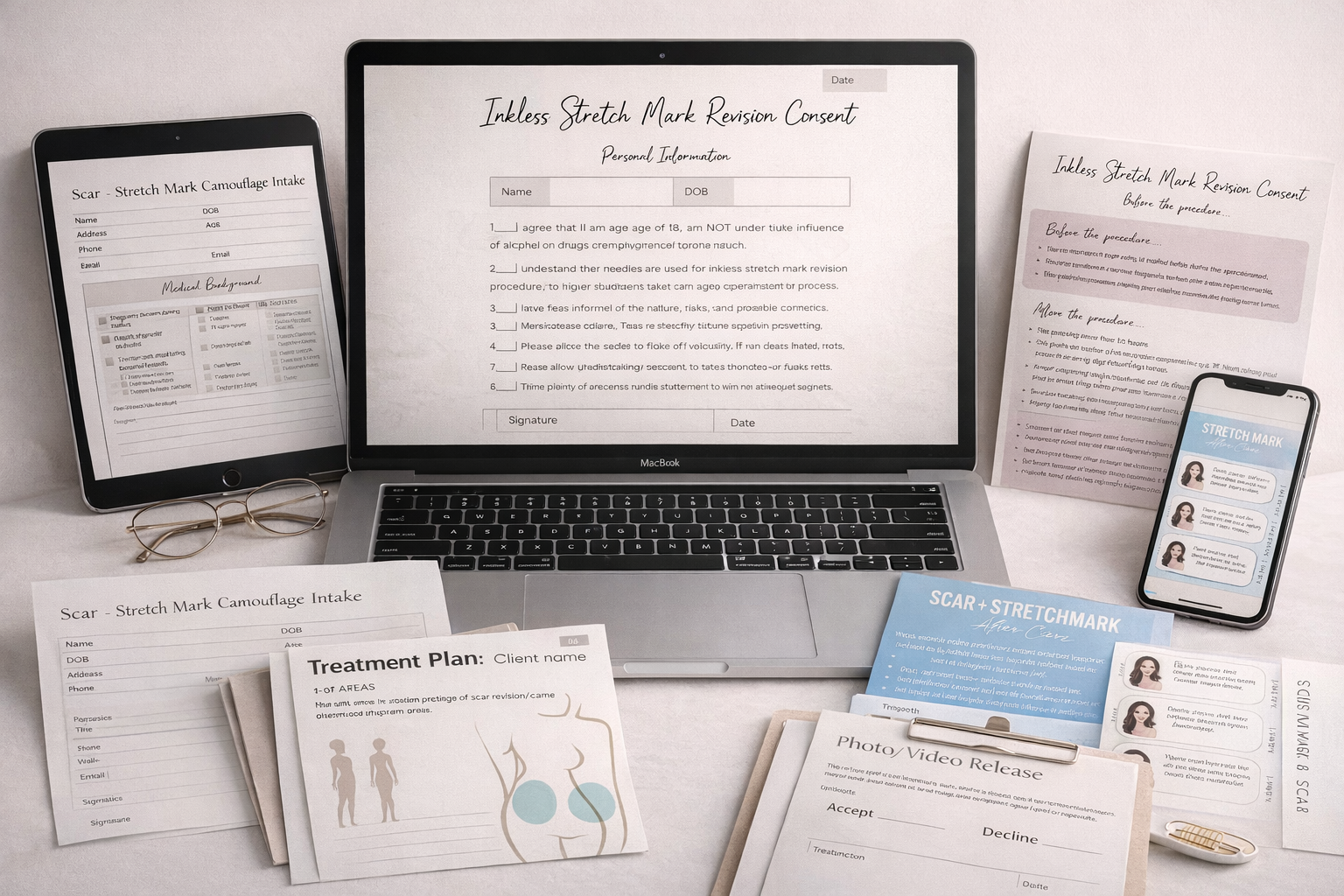
Without structured documentation, important details get missed. Questions repeat. Expectations become unclear. This Inkless Stretch Mark Revision Intake & Documentation System gives you a complete set of professional forms designed specifically for paramedical tattoo practitioners performing ISR treatments.
Download it. Use it. Implement it immediately.

Stop Managing Clients With Scattered Documents
When you do not have a structured intake and consent system in place, small inefficiencies begin to compound.
- You verbally explain the procedure every consultation.
- You manually write treatment plans.
- You repeat pre-care instructions.
- You send aftercare instructions through messages.
- You ask the same health questions again and again.
That process is exhausting.
Without proper documentation, practitioners risk:
- Client misunderstandings
- Missing medical information
- Consent confusion
- Treatment expectation disputes
- Unorganized records
- You do not need more manual work. You need a clear system that organizes your client process from consultation to treatment.
The Inkless Stretch Mark Revision Documentation System
This is not a generic intake form.
It is a complete documentation workflow designed specifically for paramedical tattoo practitioners performing inkless stretch mark revision and camouflage procedures.
Each document is structured to guide the practitioner and the client through the entire treatment process.
The system includes:
- A complete medical intake form
- A legally structured consent form
- Professional aftercare cards
- A visual treatment plan sheet
- A photo and video release form
- Pre- and post-care consent documentation
Everything is organized so you can operate with structure, clarity, and professionalism.
- No rewriting. No recreating documents. No inconsistent explanations.
Simply implement the system into your client process.
Why This Resource Matters
Paramedical tattoo procedures involve sensitive skin conditions, healing management, and clear client expectations. Proper documentation ensures that both the practitioner and the client understand the treatment process before any procedure begins.
When your documentation is structured, your workflow becomes more organized, professional, and consistent.
This system protects your practice.
Improve Client Consultation Clarity
Structured intake forms collect essential medical history, skin conditions, medications, and contraindications before treatment. This helps practitioners make informed decisions and ensures the client is suitable.
Ensure Proper Informed Consent
Clear consent documentation explains the procedure, risks, healing expectations, and treatment limitations. Clients fully understand what the procedure involves before giving their approval.
Protect Your Professional Practice
Documented consent and medical information help protect practitioners by confirming that clients have disclosed their health history and understand the procedure and possible outcomes.
Keep Client Records Organized
Treatment plan documentation allows practitioners to record treatment areas, session details, and progress. This keeps client information organized and accessible for future sessions.
Provide Consistent Care Instructions
Pre and post care documentation ensures every client receives the same clear preparation and healing instructions, helping support better recovery and treatment outcomes.
Build Trust Through Professional Systems
Using structured documentation demonstrates professionalism, preparation, and responsibility. Clients feel more confident working with practitioners who follow organized processes.
Improve Client Intake and Consultation
A professional intake form helps you gather essential medical information before performing the procedure. Proper client intake ensures you fully understand your client’s health background, skin condition, and treatment history before beginning any paramedical procedure.
This includes:
Medical history
Important health information such as past illnesses, surgeries, or medical conditions that may affect healing, skin response, or treatment suitability.
Skin conditions
Existing skin concerns such as eczema, psoriasis, infections, irritation, or sensitivity that could influence how the skin reacts to the procedure.
Medications
Current medications including blood thinners, antibiotics, or topical treatments that may affect healing, bleeding, or skin regeneration.
Allergies
Known allergies to ingredients, anesthetics, topical products, or skincare substances used during the procedure.
Contraindications
Conditions that may prevent the treatment from being safely performed, such as pregnancy, certain medical disorders, or active skin conditions.
Previous treatments
Information about prior stretch mark revision, camouflage treatments, cosmetic procedures, or skin therapies that may affect the current treatment plan.
Having this information properly documented creates a safer treatment process, improves consultation accuracy, and protects both practitioner and client by ensuring that all important medical considerations are recorded before the procedure begins.
Protect Your Practice With Clear Consent
The consent documentation outlines:
- Procedure details
- Possible risks and complications
- Healing expectations
- Treatment limitations
- Client responsibilities
When clients sign informed consent, expectations are clearly documented before treatment begins.
This reduces confusion and protects your practice.
Provide Clear Pre and Post Care Instructions
Healing management directly affects treatment results.
The pre and post care consent ensures clients understand:
- Preparation before treatment
- Healing expectations
- Activities to avoid
- Aftercare application instructions
- Normal healing symptoms
Clear instructions help support better healing outcomes.
Maintain Professional Treatment Records
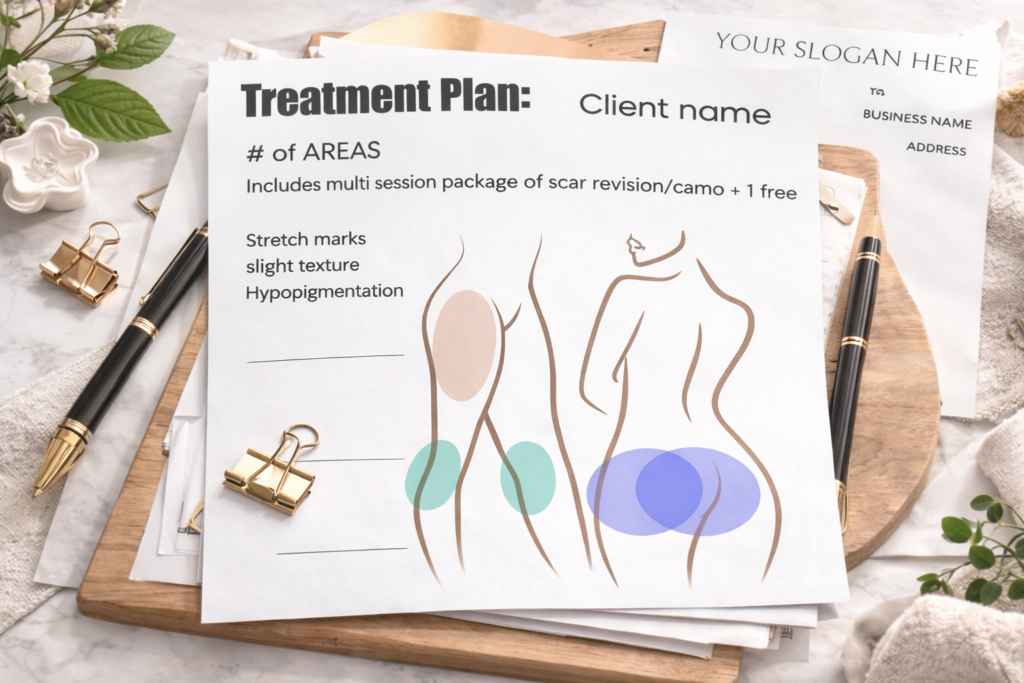
The included treatment plan sheet allows you to clearly document important details for every client treatment, including the areas being treated, session planning, treatment strategy, and client progress. By keeping this information organized in one place, you create a structured record for each procedure, helping maintain consistency, track results over time, and support a more professional and organized workflow.
Use Professional Aftercare Cards
Instead of repeating instructions after every appointment, provide your clients with structured aftercare guidance.
The aftercare cards outline:
- Healing expectations
- Daily care instructions
- What to avoid during recovery
- Normal skin reactions
- Healing timelines
This helps prevent confusion and improves healing compliance.
Manage Client Photo Consent Professionally
Many practitioners document before and after results.
The included photo and video release form allows you to obtain written permission for:
- Marketing usage
- Social media sharing
- Educational material
- Client record documentation
This protects your right to use treatment images appropriately.
Designed for Practitioners Who Want Structure
If you are building your paramedical practice, organization matters.
Professional documentation helps your business feel:
- Structured
- Responsible
- Established
- Prepared
When you implement professional documentation:
- Client consultations become smoother
- Expectations become clearer
- Records become organized
- Your workflow becomes consistent
Your practice begins operating on systems instead of memory.
What Is Included
This documentation bundle includes:
Inkless Stretch Mark Revision Intake Form
Collects complete client health and treatment information before the procedure.
Inkless Stretch Mark Revision Consent Form
Documents procedure understanding, risks, and client agreement.
Professional Aftercare Cards
Clear healing guidance designed for stretch mark revision treatments.
Treatment Plan Sheet
Allows practitioners to map treatment areas and session plans.
Photo and Video Release Form
Provides permission for marketing and documentation use.
Pre and Post Care Consent Form
Ensures clients understand preparation and recovery responsibilities.
Each document is designed for professional paramedical tattoo studios.
Who This Is For
This documentation system is designed for practitioners performing:
- Inkless stretch mark revision
- Stretch mark camouflage
- Scar camouflage treatments
- Areola restoration procedures
- Paramedical tattoo services
It is especially useful for:
- New practitioners starting their studio
- Growing studios managing more clients
- Artists who want organized client documentation
- Practitioners who want consistent intake and consent systems
If you perform paramedical tattoo procedures, this system belongs in your workflow.

Frequently Asked Questions
This resource includes a complete intake form, consent form, treatment plan sheet, aftercare cards, photo release form, and pre- and post-care consent document designed for inkless stretch mark revision treatments.
Yes. These templates are designed to be reused for every client consultation and treatment session.
Yes. The forms are structured specifically for stretch mark revision, scar camouflage, and paramedical tattoo treatments.
No. These documents support your consultation by providing structured written documentation for both practitioner and client.
Yes. The templates can be printed for in-studio use or shared digitally depending on your workflow.
No. This is a digital resource that you download and integrate into your client process.
Words from Those We’ve Helped
Trustindex verifies that the original source of the review is Google. Sneha has been doing my lashes for about 6 months now! She’s fantastic. Most importantly she’s clean and hygienic while performing lash fills. I highly recommend.Trustindex verifies that the original source of the review is Google. Sneha is highly skilled, knowledgeable, and above all else, incredibly kind. Her loft is also beautiful and fully stocked with amazing skin care and beauty products!Trustindex verifies that the original source of the review is Google. Sneha does such lovely work with such care and compassion ❤️Trustindex verifies that the original source of the review is Google. So friendly, professional, and knowledgeable.Trustindex verifies that the original source of the review is Google. Sneha is so wonderful and caring with her clients. She took her time to overview any questions concerns and care I had during our session. I can’t wait to go back for my next session !Trustindex verifies that the original source of the review is Google. Chose this master class program because I liked the approach she had on my own scar 😊. Treating the texture first , rather than just using color to cover it up. She really cares about proper training and continued support after your certification. I would highly recommend Heal Ink Beauty Master Class.Trustindex verifies that the original source of the review is Google. I’ve been visiting Sneha to get my lashes done and chemical peels for over a year and my lashes always turn out fantastic and my skin has never looked better! She’s an artist, an expert, and such a wonderful person. I look forward to every appointment with her!Trustindex verifies that the original source of the review is Google. I would absolutely recommend this establishment and the owner, Sneha. I had an awful experience with a doctor, who almost cost me my life. She is helping me, return my face, back to normal. We are a retired military family and with moving, it is hard to find someone in Florida, that takes their job seriously. For anyone at Macdill, she is on Kennedy, close to base. You won't be disappointed. I did a procell treatment for the first time today and you could notice the difference in my skin. I am 55. I don't want to give my information on here, but Sneha can provide my contact information. I have already made another appointment. You won't be disappointed.Trustindex verifies that the original source of the review is Google. I had my brows touched up and my lips color-corrected by Sneha at Heal Ink Beauty, and I couldn't be happier with the experience! My previously done brows were fading and needed a refresh. Sneha took the time to explain every step in detail and recommended doing the touch-up in gradual sessions to achieve the exact results I wanted. She's caring, passionate, and incredibly knowledgeable -- truly a master of her craft. It's amazing to have someone so talented and internationally recognized right here in Tampa. She also offers many other services like facials and stretch mark fading, and I'm excited to continue working with her. Highly recommend!Verified by TrustindexTrustindex verified badge is the Universal Symbol of Trust. Only the greatest companies can get the verified badge who has a review score above 4.5, based on customer reviews over the past 12 months. Read more
Your Practice Needs Structured Documentation
Professional procedures require professional systems. Clear intake forms, documented consent, structured treatment plans, and written aftercare instructions help protect your practice and improve client communication. When documentation is organized, consultations become smoother, expectations become clearer, and your workflow becomes more efficient.
Operate with structure. Protect your process. Support better treatment experiences.